
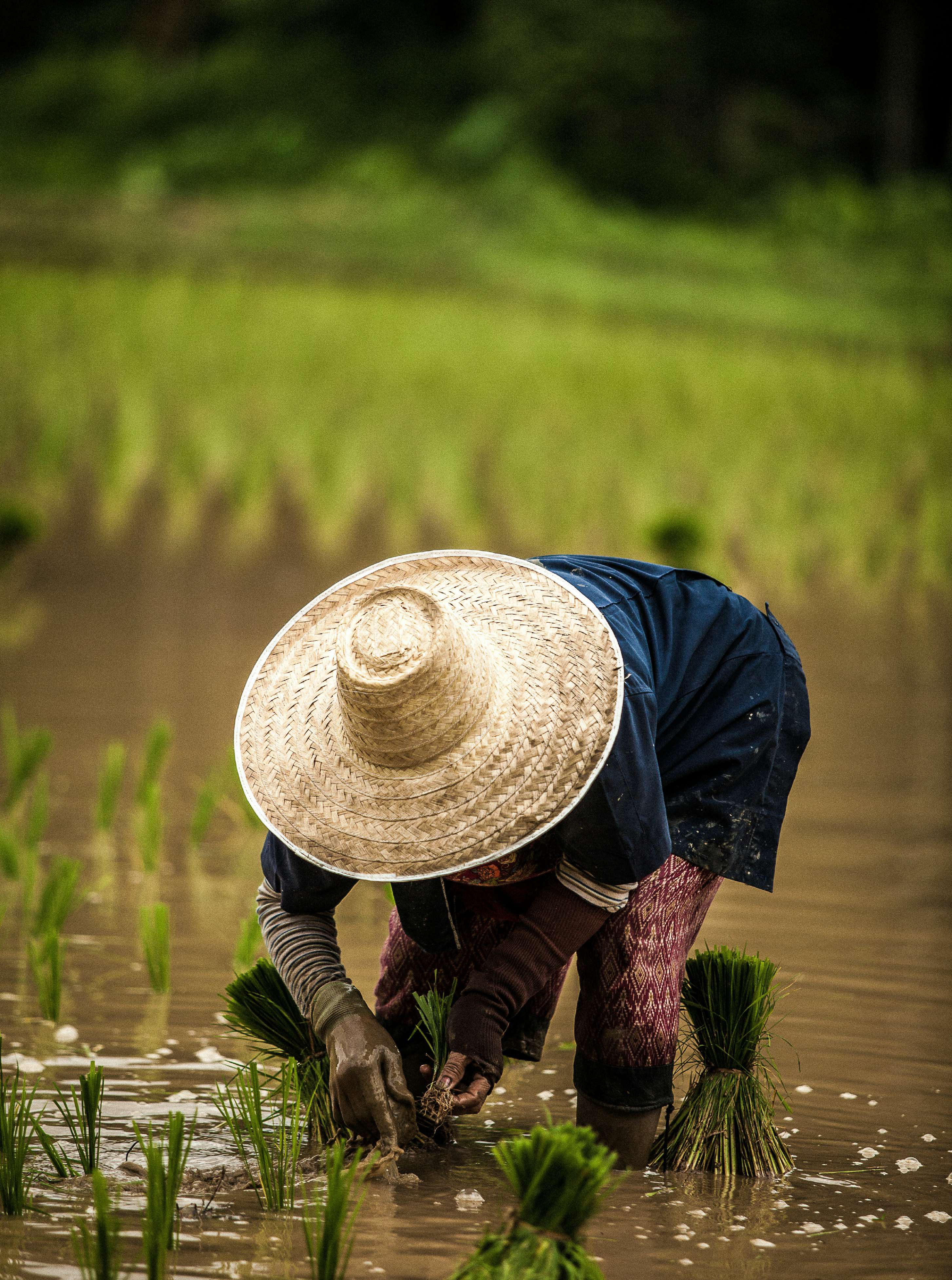
The monsoon came three weeks late last year. By the time the rains started, half of the seed stock at the garden centres down the road had already been sown and watered into a heatwave. Our fields didn't flinch, because the seeds we plant had seen all of this before.
That is the short answer for why heirloom seeds matter more every year. Here is the longer one.
What heirloom actually means
An heirloom variety is a plant line that has been open-pollinated, saved, and replanted by farmers for decades, sometimes centuries. Every season, the seeds of the plants that survived and fed someone well went back into the ground the next year. The seeds of the plants that wilted, bolted, got devoured, or tasted wrong did not. Multiply that decision a thousand times and you get a variety with a memory of the place that raised it.
An F1 hybrid, by contrast, is the child of two carefully chosen parent lines, bred in a single generation for yield, uniform size, or shelf life. It's often brilliant on its first season. It has no backup, because it has no history.
What a warming climate is doing to gardens
Three things we see, in order of how often they break a season:
- The rains arrive late, or too hard
- A heat dome sits on the country for a week
- A pest that used to die off in the cool season now lives year-round
Every one of these is a stress test. Every one of these is a moment when a variety's memory matters, because the plant is being asked a question it may not have been trained for.
What we've watched happen
In 2024 a long dry stretch hit Chiang Mai a month earlier than usual. We had a trial bed with three tomato varieties: a common F1 from an international seed house, our own Yellow Cherry heirloom, and a variety Pa Noi had been saving for fifteen years. The F1 dropped every flower. The Yellow Cherry slowed down but kept setting fruit. Pa Noi's variety shrugged.
This is anecdotal. A careful trial would need years and replicates. But it matches what farmers across the region have been telling us: old seeds survive new weather better.
The argument for keeping the library open
Genetic diversity is insurance. A locally adapted heirloom is a single, well-written insurance policy, and a dozen of them is a library. When the next monsoon decides to come in May instead of June, at least one variety in your beds will have seen it before and will have a plant strategy queued up.
The tragedy of modern seed systems is that the insurance is being thrown away. Over a generation, the world's working library of food crops shrinks into a handful of optimized commercial lines.
F1 hybrids can't be saved, so the genetic material returns to the seed company each season. If a new pathogen or an unusual year happens to be one of those lines' weak points, the fallout is continental.
What a home gardener can do
You don't need a farm to help. A home gardener keeping three or four heirloom varieties alive, season after season, in a specific microclimate, is doing exactly what a national seed bank does, in miniature.
- Grow at least one variety whose grandparent you can trace. A chili your grandmother cooked with is a good start
- Save seeds from the plants that surprised you in a bad year. Those are the adapted ones
- Share cuttings and seeds with gardeners in a different valley. Local isn't enough. Regional is
- Keep notes. A paragraph a season is enough to remember which variety laughed off the heat
The long view
We started Panya because the varieties we love were quietly disappearing. Every packet we sell is a bet that a gardener somewhere will grow it well enough to save seeds, and plant it again, and share them with someone else. That's how a variety survives a century. It's also how a region stays fed.
A warming climate makes all of this more urgent, not less. The best time to have been saving seeds was forty years ago. The second best time is this weekend.
